How Animals Handle Unfamiliar Environments
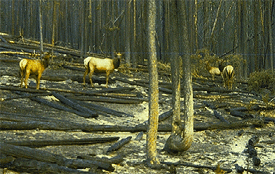
Elk looking for food in a new, post-fire environment |
Think for a moment how you react when you visit a new place. Are you disoriented and maybe even a little frightened? Do you prefer to go to new places with friends or alone? How do you choose where to eat? Do you ask someone local or do you settle for something familiar like McDonald's, even if you don't like the food?
When moved to a new location, or when their environment changes due to fires or floods, livestock and other animals face many of the same challenges we do. In fact, a new environment is generally much harder on livestock than on people because animals don't have the luxury of fast food chains, road maps, or signs. Much of the knowledge animals have from their old environment may be useless or even detrimental in the new one. Animals suffer more from malnutrition because of a lack of familiar foods. They may eat poisonous plants because they often choose familiar toxic foods over unfamiliar foods. There is also evidence that the same dose of a toxin has a much greater effect in an unfamiliar environment so the eating the same amount of a toxic food they could have in a familiar environment may be lethal. This may be because stress inhibits immune responses, increasing illnesses and decreasing performance.
 Click here for stories of dangers to animals in new environments. Click here for stories of dangers to animals in new environments. |
Based on an understanding of how animals learn, what can you do to ease transitions, increase animal performance on new foods, and make your operation more productive?
Next - In Conclusion: Key Points to Take With You From This Meal
|