Habitat Selection
Both livestock and wildlife inhabit specific areas in the environment called home ranges, areas they tend to occupy year after year. Interactions with mother influence the home ranges of offspring.
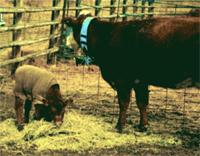
This cross-fostered calf preferred his new mother's home range to that of his birth mother.
|
In one study, Welsh Mountain sheep preferred native range while Clun sheep preferred seeded range. Lambs from Welsh Mountain sheep were grafted onto Clun sheep and vice versa. After weaning, the Clun lambs preferred native ranges, whereas the Welsh Mountain lambs preferred seeded ranges. The same has been shown for cattle on rangelands.
Animals may stray from home ranges because of interactions with peers, or due to a lack of water or food in times of drought or fire. When conditions improve, they generally return to their home ranges. For example, when water sources dry up, cows may travel to find a new water source, increasing the size of their home range. When rains or snow refill old water sources, the cows are likely to return to their original range.
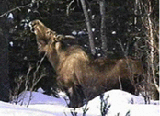 |
Wild herbivores also learn habitat preferences from their mothers. In some cases, home range fidelity is so strong that offspring actually use poorer quality habitats as a result of experiences with mother. For instance, each fall a herd of moose in central Norway migrates to high-elevation winter ranges, rather than follow normal migratory patterns to the lowlands. Archeological evidence indicates this has been occurring for the past 5,000 years. The moose evidently began this migration pattern because of hunting pressure. This behavior continues despite lower-than-normal calf production of the herd due to poor winter range conditions, demonstrating the persistence of learned habits.
Next - But Mom, everyone else is doing it!
|