|
|
Peer Influence
Other animals, young and old, can also influence diet and habitat selection. When mother is not available, lambs can learn from other older ewes. For example, lambs exposed to barley with their mothers ate 40% more than lambs exposed to barely with an adult female from the flock. However, eating barley with any ewe dramatically improved consumption by lambs compared to lambs exposed to barley alone.
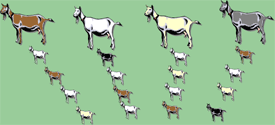 While goats started with very different diets, the diets of subsequent generations became more and more similar. While goats started with very different diets, the diets of subsequent generations became more and more similar. |
An animal can learn to eat new foods if it sees other animals eating foods it is unfamiliar with, though younger animals are much more likely to change, than older animals. As an example, in one study, 4 groups of goats reared on 4 different farms were placed on a common pasture with a variety of plants. Goats from the same farm ate similar plants, but each farm's goats ate a different selection of plants. The food preferences of the mothers did not change over the next four years. However, as the offspring interacted, they began to eat more similar diets. During the four year life of the study, researchers found that the diets of offspring became more and more similar. In addition, although kids selected different diets than their mothers, it was still possible to track which kid's mother came from which farm based on a noticeable preference for specific plants
Next - Because we've ALWAYS done it this way!
|